Data-driven technologies: the means and the goal for a brighter future mobility in Bangalore
Policy Analysis
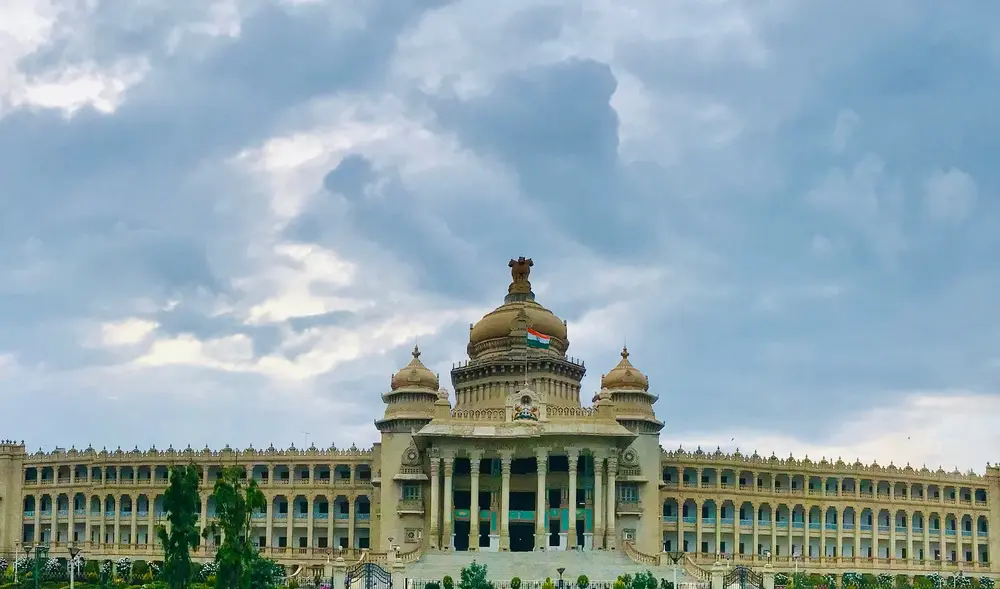
Bangalore, an Indian city with over 12 million habitants (Macrotrends, 2021), often referred to as the “Silicon Valley” of India, has not been able to escape one of the most pressing issues of fast-growing cities of the 21st century: rising traffic congestion and all the many problems that are part of it. According to the TomTom traffic index (an organization specialized in location technology), Bangalore’s traffic congestion was categorized as the 6th worst in the globe (2020). On average, Bangaloreans spend more than 240 hours trapped in traffic jams every year (Joshi, 2020). Just to put things into perspective, this is the time that one could have spent reading around twenty-eight 300-page books (with information from Capitalize My Title, n.d.), watched more than ninety-seven 2,5-hours movies, or ran around 54 marathons (healthline, n.d.).
Traffic congestion in Bangalore, Delhi, Mumbai, and Kolkata costs the Indian economy more than 15 billion USD every year (NITI Aayog, 2018). The figure is just a numerical way of portraying that the lives of millions of citizens in major Indian cities including Bangalore are negatively affected by the long travel times, the deficiency of sidewalks, the stress, the difficult time trade-offs between spending time with their families or spending time stuck in traffic, and of course the scarcity of clean air due to the high level of C02 emissions.
Moreover, Bangaloreans are currently experiencing a hype towards owning new vehicles, and a dislike towards using public and non-motorized means of transport (NITI Aayog, 2018). By 2019, Bangalore had more than 80 hundred thousand cars in the city with a trend prediction that says 5 to 6 hundred thousand vehicles will be added every year (Kulkarni, 2019). This not only results in dreadful traffic congestion but also has negative implications for energy security, pollution, health, and safety (NITI Aayog, 2018). And while the numbers of cars continue to increase, the existing infrastructure remains constant: narrow and limited (Deloitte, 2019). This last unfortunate condition necessitates an efficient solution for Bangalore to have a brighter and less congested future.
Can data-driven technologies solve the problem?
Bearing in mind that changing Bangalore’s infrastructure it’s not the best option to respond to its latent traffic congestion issue, another strategy has to be implemented. Thankfully, Bangalore has an effective option at hand that can be further developed and harnessed in the upcoming future: data-driven technologies.
The city of Bangalore is full of an innovative environment, fertile for the development of startups ranging from placing robots on the moon (TeamIndus), enabling local farmers to sell their products directly to shops without intermediaries (Ninjacart), to, of course, making automobiles smarter (CarIQ) (Bizztor, 2019). Bangalore is practically an oasis for the development and adoption of data-driven technologies in mobility and many other sectors. Moreover, Bangalore is part of the list of the National Smart City Mission, a federal program aimed at developing smart cities across India with the potential of applying the newest technologies and promote more sustainability (Ministry of Urban Development Government of India, 2015).
In addition, the local government has also pushed data-driven tech initiatives such as Bangalore Metropolitan Transport Corporation’s (BMTC) pilot app which uses Intelligent Transport Systems (ITS) to provide fixed and real-time information about the buses to the passengers (NITI Aayog, 2018, 2). In this vein, Bangalore can and should use the potential of both the private and the public sector to develop and harness data-driven technologies to respond to its mobility issues. The use of these technologies in the mobility sector will allow Bangalore to foresee a future where traffic congestion is a matter of the past, and smart mobility becomes the present and the future.
With a comprehensive analysis of traffic and commute patterns, data-driven technologies can build more efficient passenger mobility, and optimize the design of transit routes, services, infrastructure, and regulations. As a result, the authorities can identify where transit routes can be added, and pinpoint specific primary causes for traffic congestion like wrongly timed traffic signals or insufficient parking (NITI Aayog, 2018, 2). Furthermore, these technologies allow a cooperative and interconnected transportation system where user's needs can be met through a wide variety of transportation modes. Such a cooperative and interconnected transportation system can also include other aspects that are closely linked to mobility such as weather data, air quality, and traffic violation information (NITI Aayog, 2018, 2).
Considering the existing entrepreneurial environment in Bangalore, the local and federal government's imperative to develop and harness data-driven technologies for the mobility sector, and the fact that the streets in the city cannot be expanded to fit in more cars and alleviate congestion, the use of data-driven technologies in Bangalore's mobility sector can be almost predicted. The already existing public initiatives, as well as the many startup projects, focused on responding to mobility issues with data-driven technologies, are almost spoiling us the end of the movie. Data-driven technologies are the oracle to see Bangalore's mobility future as they are both the means and the end to solve one of the most pressing issues of this Indian megalopolis.
References:
Bizztor. (2019). Startups In Bangalore-20 Most Amazing Startups to look at. https://bizztor.com/top-startups-in-bangalore/
Capitalize my title. (n.d.). How long does it take to read 300 pages? https://capitalizemytitle.com/reading-time/300-pages/#:~:text=Answer%3A%20300%20pages%20will%20take,in%20less%20than%2015%20minutes.
Deloitte. (2019). Deloitte City Mobility Index. https://www2.deloitte.com/content/dam/insights/us/articles/4331_Deloitte-City-Mobility-Index/Bangalore_GlobalCityMobility_WEB.pdf
healthline. (n.d.). What is the average marathon time? https://www.healthline.com/health/exercise-fitness/average-marathon-time#:~:text=Across%20the%20board%2C%20most%20people,finish%20in%20around%202%20hours.
Joshi, S. (2020). It’s official: Bengaluru has the world’s worst traffic. https://www.vice.com/en/article/dyg3wa/its-official-bengaluru-has-the-worlds-worst-traffic
Kulkarni, C. (2019). Bengaluru closes in on Delhi, has 80 lakh vehicles. https://www.deccanherald.com/city/top-bengaluru-stories/bengaluru-closes-in-on-delhi-has-80-lakh-vehicles-726305.html
Macrotrends. (2021). Bangalore, India Metro Area Population 1950-2021. https://www.macrotrends.net/cities/21176/bangalore/population
Ministry of Urban Development Government of India. (2015). Mission Statement and Guidelines. http://smartcities.gov.in/upload/uploadfiles/files/SmartCityGuidelines(1).pdf
NITI Aayog (2018). Data-Driven Mobility: Improving Passenger Transportation Through Data. https://smartnet.niua.org/sites/default/files/resources/mobility-data.pdf
NITI Aayog (2018). Moving Forward Together: Enabling Shared Mobility in India. https://smartnet.niua.org/sites/default/files/resources/shared-mobility.pdf
TomTom. (2020). Traffic Index 2020. https://www.tomtom.com/en_gb/traffic-index/ranking/

About the author
Almudena Nunez holds a bachelor’s degree in International Relations with a specialization in Business and International Finances from Anahuac University in Mexico, her home country. She has professional experience in energy and sustainability, technology adoption for human capital, congressional affairs, and space policy. Additionally, she has taken part in entrepreneurship projects in Mexico City and in Washington D.C. Currently, she is an MPP candidate with specialization in International Political Economy and European Public Policy at the Willy Brandt School of Public Policy.
~ The views represented in this blog post do not necessarily represent those of the Brandt School. ~
![[Translate to English:] Facebook Icon](/fileadmin/SocialMediaIcons/iconfinder_06-facebook_104498.svg "Fakebookseite der Staatswissenschaftlichen Fakultät")
![[Translate to English:] Youtube Icon](/fileadmin/SocialMediaIcons/iconfinder_18-youtube_104482.svg)


![[Translate to English:] facebook icon](/fileadmin/SocialMediaIcons/iconfinder_06-facebook_white.svg)
![[Translate to English:] twitter icon](/fileadmin/SocialMediaIcons/iconfinder_03-twitter_white.svg)
![[Translate to English:] instagram icon](/fileadmin/SocialMediaIcons/iconfinder_38-instagram_white.svg)
![[Translate to English:] YouTube icon](/fileadmin/SocialMediaIcons/iconfinder_18-youtube_white.svg)
![[Translate to English:] xing icon](/fileadmin/SocialMediaIcons/iconfinder_xing_white.svg)