From Training to Practice in Colombia’s Police Transformation
Research and PhD
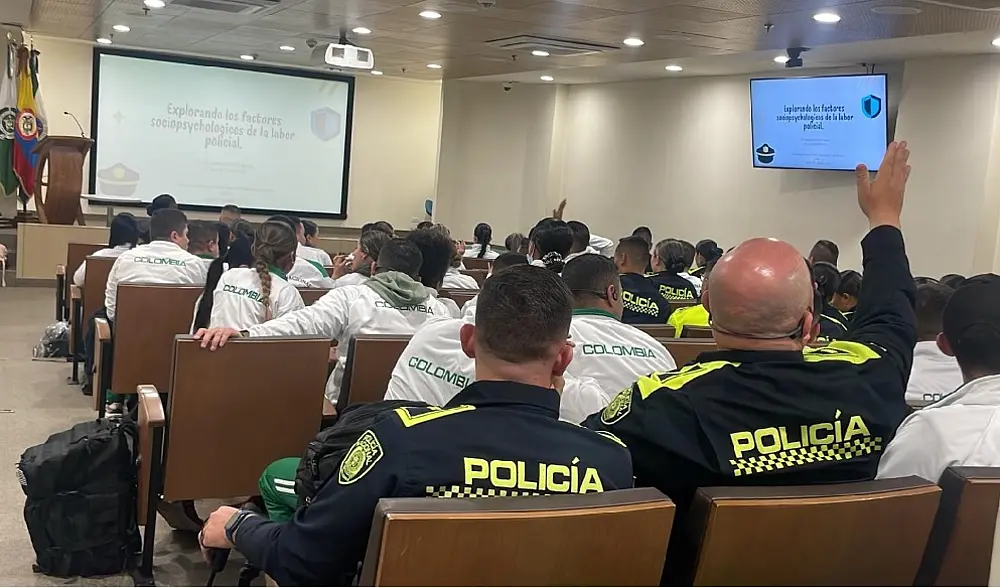
Photo: Field research with the Colombian National Police, 2025. Photograph by Dr. Alejandra Ortiz-Ayala
Drafting a new police curriculum is one thing, but changing how officers react under pressure on the street is another. Rebuilding public trust in policing requires far more than updating training manuals. Therefore, following the 2021 national protests and calls to strengthen human rights, professionalization, and legitimacy, Colombia’s National Police has undergone a process of institutional and curricular reform. But an important question remains: how can we know whether these reforms are changing how police officers understand their role? And most importantly, how can we ensure that those modifications change their members' behaviour?
This question was at the center of the event “Strengthening the Professionalization of the National Police in Colombia: Evidence-Based Training and International Academic Cooperation,” held on August 11, 2026. The event brought together Dr. Alejandra Ortiz-Ayala from the Willy Brandt School of Public Policy at the University of Erfurt, Dr. Juan David Gélvez from the German Institute for Global and Area Studies (GIGA), Dr. Ana Cristancho Amaya from De Montfort University (DMU), and moderator Dr. Camilo Ramírez Motoa, Researcher and Methodological Advisor for the Colombian National Police. Together, they discussed what the pilot findings mean for police training and how academic cooperation can support the next steps of the reform.
The discussion drew on research conducted as part of REFORCE – Reform and Evaluation of the Colombian Police: Human Rights and Institutional Change, supported by the Folke Bernadotte Academy (FBA), Sweden’s government agency for peace, security, and development, and the University of Erfurt. The involvement of FBA reflects the international dimension of the project and Sweden’s broader engagement in peacebuilding and institutional development. One part of the project focuses on a deceptively simple challenge: how do you measure police transformation?
Measuring Police Professionalization
To address this question, the research team developed a pilot questionnaire to examine whether police training is associated with changes not only in knowledge, but also in the attitudes and professional orientations that shape everyday police work. The pilot included a final sample of 1,058 participants across the School of Non-Commissioned Officers and Executive Level (ESJIM), the Police Unit for Peacebuilding (UNIPEP), the National Police Intelligence Directorate (DIPOL), and the Police Postgraduate School (ESPOL) (Ortiz-Ayala & Tiscornia, 2026a).
Rather than asking only whether officers had learned specific course content, the instrument looked at broader dimensions of professionalization: attitudes toward human rights, relations with citizens, preventive policing, perceptions of protest and the use of force, the police officer’s role as a “guardian” or “warrior,” and the internal work environment. The results are exploratory and should not be read as a definitive assessment of the reform. Still, they show why systematic monitoring can be useful for understanding where training may be contributing to change, as well as the remaining gaps.
One of the clearest patterns concerned attitudes toward human rights. Participants who had completed the training were more likely to see human rights as supporting effective and legitimate police work rather than limiting it. This suggests that training may help reinforce an understanding of human rights as part of professional policing and stronger relations with citizens. Results were less clear regarding protest and the use of force. While most differences moved in the expected direction, the pilot found no clear differences between trained and untrained participants, highlighting an area for continued training and monitoring (Ortiz-Ayala & Tiscornia, 2026b).
Another part of the pilot examined how officers understand the purpose of policing itself. The distinction between “guardian” and “warrior” policing captures two different ways of approaching the police role: one centered on protection, trust, and service, and another that places greater emphasis on control and coercive authority (Rahr & Rice, 2015). In this sense, participants who had completed the training showed a stronger orientation toward the guardian model, including greater support for protecting citizens’ rights, building trust, and working with communities to solve problems. At the same time, participants continued to associate police authority with the use of force (Ortiz-Ayala & Tiscornia, 2026b). This suggests that training could further emphasize that police authority does not depend on the use of force.
Beyond the classroom
The research also highlights something easy to overlook in discussions about police reform: what officers learn in the classroom is only part of the story. Working conditions, leadership, relationships between ranks, institutional support, and officers’ own sense of legitimacy within the organization can shape how professional principles are carried into practice. An exploratory analysis found that a more positive perception of the work environment was associated with a stronger guardian orientation, although the study did not find sufficient statistical evidence to conclude that working conditions changed the effect of the training itself (Ortiz-Ayala et al., 2026). This point also came up during the discussion. Dr. Ortiz-Ayala stressed that training needs to be supported by broader institutional changes and improvements in the work environment. Dr. Cristancho similarly highlighted how internal practices can shape professional behavior, reinforcing the importance of looking at what officers experience inside the institution as part of police professionalization.
The role of academic cooperation in police institutional transformation
Academic cooperation was another key theme of the event. Partnerships with universities and research institutions can help police organizations test new approaches, identify gaps, and use evidence to improve training. Building on this idea, Dr. Gélvez highlighted the potential to refine the pilot into a smaller set of indicators that could be compared across groups and police schools over time, turning a one-time evaluation into a tool for tracking progress and improving training.
Dr. Cristancho emphasized another important part of this process: institutional openness. Police institutions have traditionally been difficult environments for independent academic research, making this collaboration significant. Bringing together academic methods and the practical knowledge of police institutions can turn evaluation into an opportunity for institutional learning.
The panel also discussed how training itself could become more practical. During the discussion, a participant pointed to Sweden as an example, where simulation exercises are used to prepare officers to make decisions under pressure. Similar approaches could help translate principles such as proportional use of force and protection of peaceful protest into decisions officers face in real situations. The event also identified clear next steps: continue measuring the effects of training, make training more practical, and consider how officers’ working conditions affect professionalization.
In sum, the collaboration behind REFORCE also shows what academic partnerships can contribute to this process. Rather than evaluating police reform from the outside, researchers and police institutions can work together to identify problems, test approaches, and use evidence to improve training. Moving from training to practice will depend on keeping that dialogue open.
~ The views represented in this blog post do not necessarily represent those of the Brandt School. ~
References
Ortiz-Ayala, A., Tiscornia, L., Celis Ruiz, J., & Ramírez Motoa, C. (forthcoming). Strengthening civilian protection in Colombia: Operational challenges and police decision-making [Policy brief under editorial review]. Instituto Colombo-Alemán para la Paz – CAPAZ.
Ortiz-Ayala, A., & Tiscornia, L. (2026a). Both guardian and warrior: Police willingness to protect civilians in post-agreement Colombia [Conference presentation]. American Political Science Association (APSA) Annual Meeting.
Ortiz-Ayala, A., & Tiscornia, L. (2026b). Strengthening police professionalization in Colombia: Evidence-based training and international academic cooperation [Unpublished internal executive report].
Rahr, S., & Rice, S. K. (2015). From warriors to guardians: Recommitting American police culture to democratic ideals. New Perspectives in Policing Bulletin. National Institute of Justice.
About the Authors
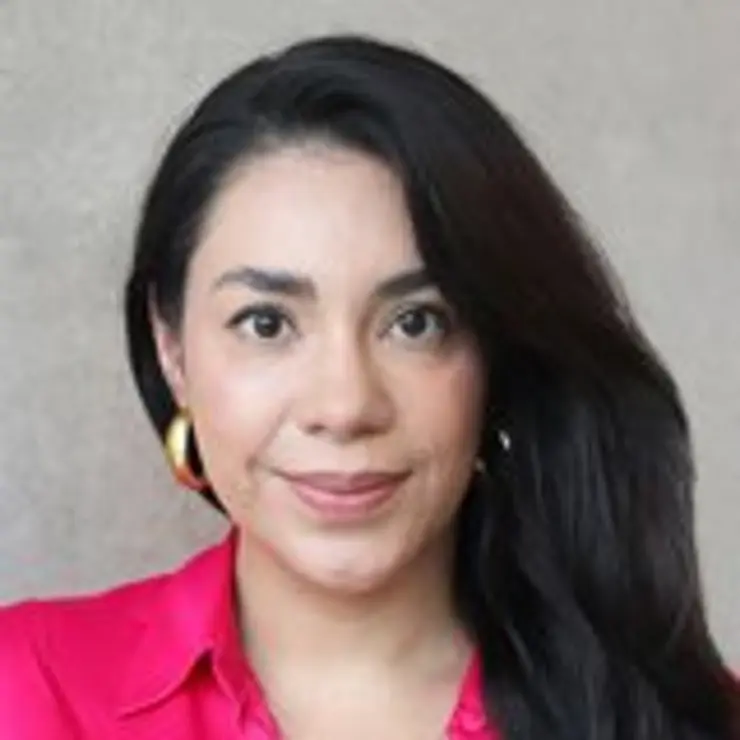
Alejandra del Pilar Ortiz-Ayala, PhD, is a Research Associate and Head of the Conflict and Conflict Management Specialization at the Willy Brandt School of Public Policy, University of Erfurt. Her research focuses on security sector reform, police professionalization, and institutional change. She leads the REFORCE project and the research presented here, including the pilot evaluation, field research with the Colombian National Police, and analysis of its findings.
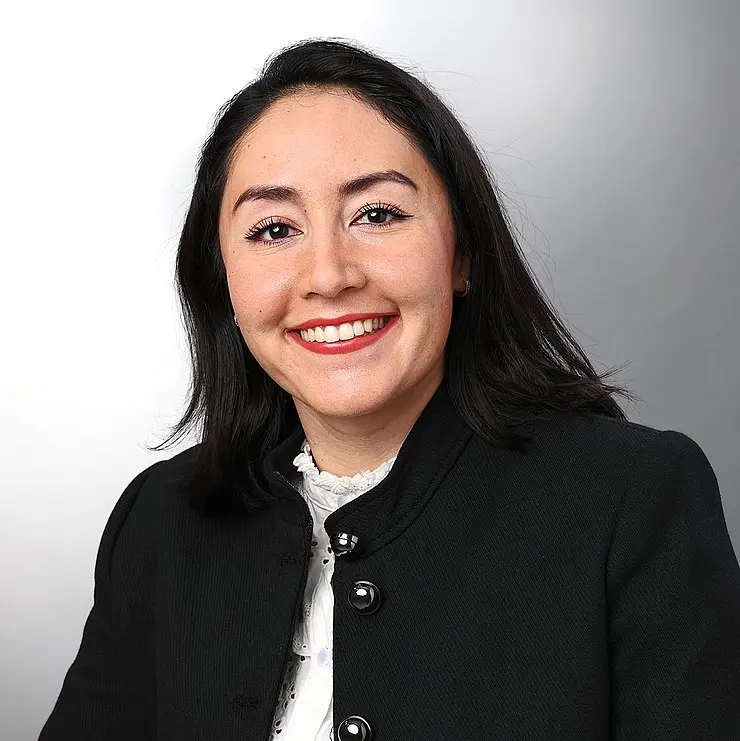
Rebeca Olascoaga Carbajal García is a Mexican Master of Public Policy candidate at the Willy Brandt School of Public Policy and a DAAD Helmut-Schmidt Program scholar. She brings experience in governance, gender equality, security sector reform, and democratic accountability, including work on internationally funded projects supported by USAID and UNDP. Her interests focus on how institutions respond to complex social and political challenges in Latin America and beyond.
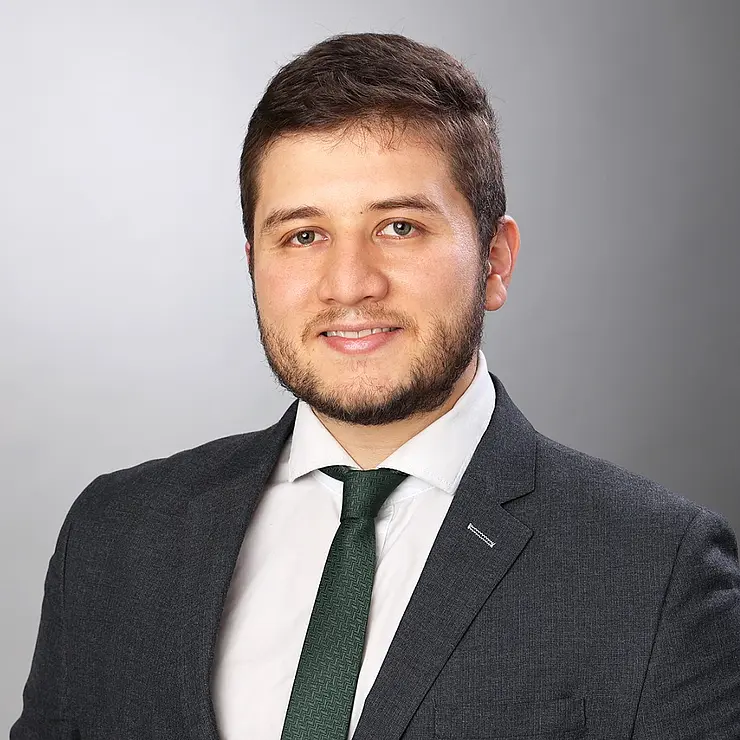
Andres Felipe Alvarez Joya is a Colombian candidate for the Master of Public Policy at the Willy Brandt School of Public Policy. He specializes in Development and Socio-Economic Policies, drawing on his experience as a public servant in handling administrative proceedings and collecting data for public policy design at the district level. He brings an understanding of how institutions redefine social issues and holds a particular interest in social transformation within Latin American countries and emerging regions.


