Mexico Defuses a “Time Bomb” Ahead of the 2026 World Cup: The Fall of “El Mencho”
Policy Analysis

In an operation carried out by Mexican armed forces in the municipality of Tapalpa, Jalisco, Nemesio Oseguera Cervantes, alias “El Mencho,” leader of the Cártel Jalisco Nueva Generación (CJNG) and one of the drug traffickers most wanted by Mexico and the United States, was killed. A reward of up to 15 million dollars had been offered by Washington for information leading to his capture. After more than a decade evading security operations, the CJNG leader died from injuries sustained during a confrontation with the Mexican Army.
Oseguera Cervantes’ death represents a significant blow to one of the country’s most violent and expansive criminal organizations. Founded around 2009, the CJNG managed to position itself as a dominant actor in international drug trafficking alongside the Cártel de Sinaloa. According to the National Consortium for the Study of Terrorism and Responses to Terrorism (START), the CJNG has dominant presence in 23 of Mexico’s 32 federal entities and estimated assets exceeding 20 billion dollars, reflecting remarkable financial capacity and territorial expansion (START 2023).
Beyond its territorial footprint, the CJNG stands out for its organizational scale. According to Prieto-Curiel, Campedelli, and Hope (2023), the cartel had an estimated size of approximately 28,764 members in 2022, within a range of 28,600 to 33,100 members. This estimate derives from a dynamic model calibrated with homicide, disappearance, and arrest data, making it one of the most robust quantitative exercises for assessing the operational capacity of criminal groups in Mexico.
Given this, the operation has a number of implications, both for organized crime and internationally, as discussed below.
Organizational Architecture and Expansion Model
Recent studies indicate that the CJNG’s alliance structure is hierarchical and top-down, with a clear and centralized chain of command (Jones et al. 2022). This architecture facilitates strategic control, operational discipline, and territorial coordination.
The CJNG has also been described as operating under a franchise-type model, combining centralized direction with the incorporation of less-experienced local criminal actors who operate under its brand and supervision (Jones et al. 2022, p. 79). This design has enabled accelerated expansion and the absorption of regional criminal structures.
However, hierarchically organized groups tend to fragment when key leaders are neutralized (Jones et al. 2022, p. 77). Decapitation strategies may weaken the apex but can also produce the proliferation of autonomous cells with lower strategic cohesion and a greater propensity for predatory violence.
Criminal Governance: Fear, Provision of Goods, and “Philanthropy”
Beyond its structure, the CJNG has developed sophisticated mechanisms of criminal governance. Sampó, Jenne, and Ferreira (2023) argue that its exercise of illicit rule rests primarily on three elements:
- Fear, derived from the high levels of violence deployed in territories under its control.
- Provision of public goods, mainly security, as a form of instrumental legitimation vis-à-vis local communities.
- Provision of specific goods, including what the authors describe as acts of “criminal philanthropy” (p. 658) in strategic areas.
This hybrid model—violent coercion combined with selective provision of goods—contributes to the consolidation of territorial enclaves where the cartel not only competes with the state but partially substitutes governance functions.
Implications of the Death of “El Mencho”
If the CJNG combines hierarchical structure, a franchise model, and territorial criminal governance, the removal of its leader may generate ambiguous effects. For example, it could weaken central coordination and erode internal cohesion. Additionally, given its organizational scale and expansive structure, it could incentivize fragmentation and decentralized violence (Jones et al., 2022).
In contexts of institutional weakness, these fragmented cells may intensify extortion, expand into legal markets, and consolidate more diffuse yet persistent criminal enclaves (Jones et al. 2022, p. 79). The estimated magnitude of the CJNG—close to thirty thousand members—suggests that its resilience does not depend exclusively on individual leadership (Prieto-Curiel, Campedelli, & Hope, 2023).
Geopolitical Dimension
The operation also revealed an international dimension. U.S. press reports indicated that the precise location of the leader may have resulted from bilateral interinstitutional cooperation. Nevertheless, the Mexican government emphasized that the operation was executed exclusively by national forces, limiting cooperation to intelligence sharing. This nuance seeks to preserve operational sovereignty in a context of political pressure from Washington.
On the eve of the 2026 World Cup, which Mexico will co-host with the United States and Canada, ensuring territorial stability becomes an imperative not only of internal security but also of international positioning. The operation can therefore be read as an act of state reaffirmation in the face of external narratives of territorial loss of control.
It remains to be seen whether the death of “El Mencho” will structurally weaken the CJNG or open a new internal struggle for control of the cartel. Evidence suggests that the decapitation of hierarchical organizations may produce fragmentation rather than collapse (Jones et al. 2022). In any case, the episode transcends the criminal sphere and is embedded in a complex interaction between security, sovereignty, and diplomacy in North America.
About the Authors
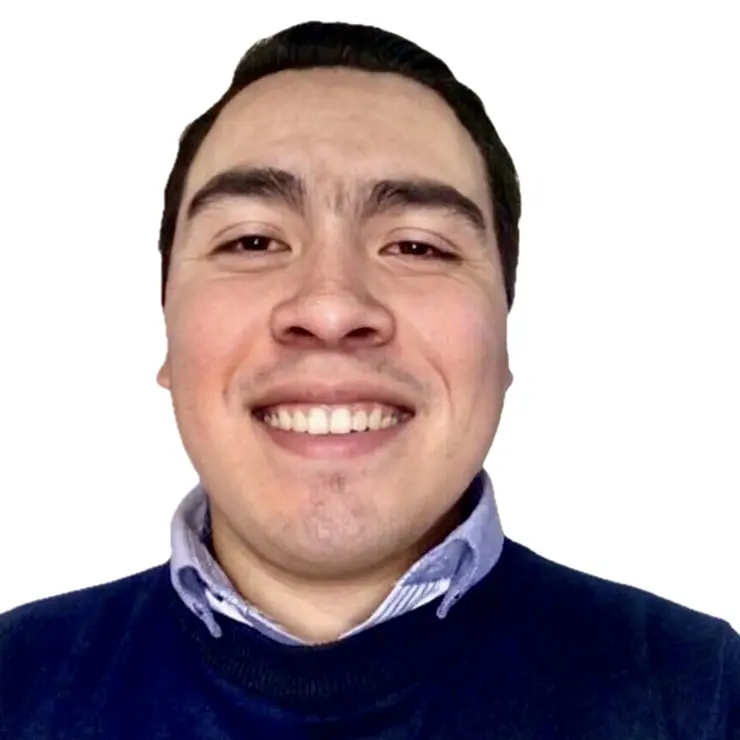
Carlos Alberto Cruz Alcántara is a lawyer specializing in fiscal and constitutional law and a master’s student in Public Administration and Public Policy at the Center for Research and Teaching in Economics (CIDE) in Mexico City. His research focuses on regulatory design, economic regulation, and fiscal sustainability. He was a visiting student at the University of Erfurt during the Winter Semester 2025–2026.

Víctor Aurioles Díaz is a Mexican specialist in international academic cooperation and public policy. He previously served as Scholarship Coordinator at the German Academic Exchange Service (DAAD) in Mexico, where he supported academic mobility and institutional collaboration between Mexico and Germany. He is currently pursuing graduate studies in public policy at the Willy Brandt School of Public Policy at the University of Erfurt, focusing on governance, geopolitics, international cooperation, and sustainable urban policy.
References
Jones, Seth G., Catrina Doxsee, y Nicholas Harrington. 2022. The Structure of Mexican Criminal Groups. Santa Monica, CA: RAND Corporation.
Prieto-Curiel, Rafael, Gian Maria Campedelli, and Alejandro Hope. 2023. “Reducing Cartel Recruitment Is the Only Way to Lower Violence in Mexico.” arXiv preprint arXiv:2307.06302. https://arxiv.org/abs/2307.06302
Sampó, Carolina, Nicole Jenne, and Marcos Alan Ferreira. 2023. “Ruling Violently: The Exercise of Criminal Governance by the Mexican Cartel Jalisco Nueva Generación (CJNG).” Revista Científica General José María Córdova 21 (43): 647–665. https://doi.org/10.21830/19006586.1172
START (National Consortium for the Study of Terrorism and Responses to Terrorism). 2023. “Tracking Cartels Infographic Series: Violent Rise of Cártel de Jalisco Nueva Generación (CJNG).” University of Maryland. https://www.start.umd.edu/tracking-cartels-infographic-series-violent-rise-c-rtel-de-jalisco-nueva-generaci-n-cjng
![[Translate to English:] Facebook Icon](/fileadmin/SocialMediaIcons/iconfinder_06-facebook_104498.svg "Fakebookseite der Staatswissenschaftlichen Fakultät")
![[Translate to English:] Youtube Icon](/fileadmin/SocialMediaIcons/iconfinder_18-youtube_104482.svg)


![[Translate to English:] facebook icon](/fileadmin/SocialMediaIcons/iconfinder_06-facebook_white.svg)
![[Translate to English:] twitter icon](/fileadmin/SocialMediaIcons/iconfinder_03-twitter_white.svg)
![[Translate to English:] instagram icon](/fileadmin/SocialMediaIcons/iconfinder_38-instagram_white.svg)
![[Translate to English:] YouTube icon](/fileadmin/SocialMediaIcons/iconfinder_18-youtube_white.svg)
![[Translate to English:] xing icon](/fileadmin/SocialMediaIcons/iconfinder_xing_white.svg)