Reflections from a GFA Consulting Group Event on International Cooperation
Policy Analysis
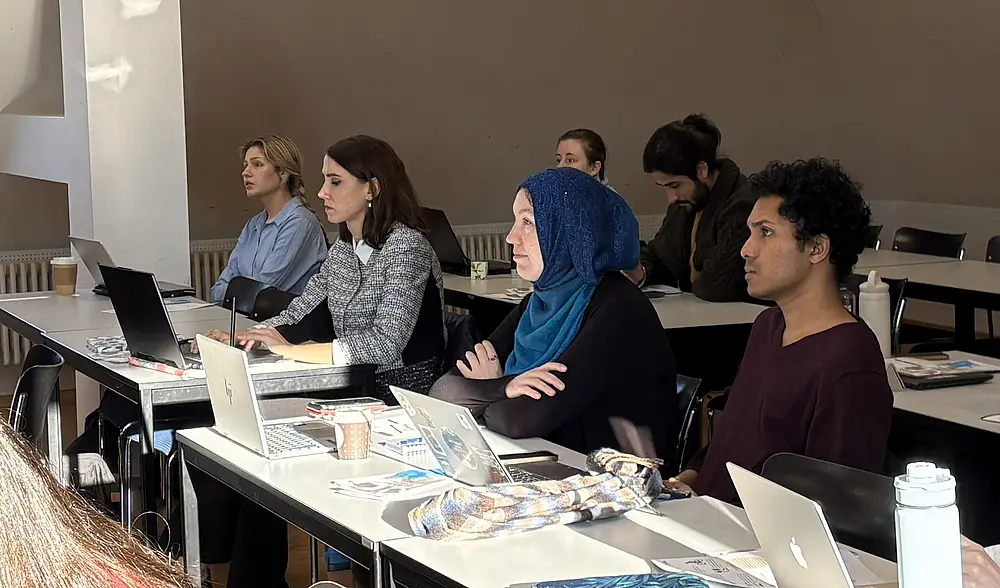
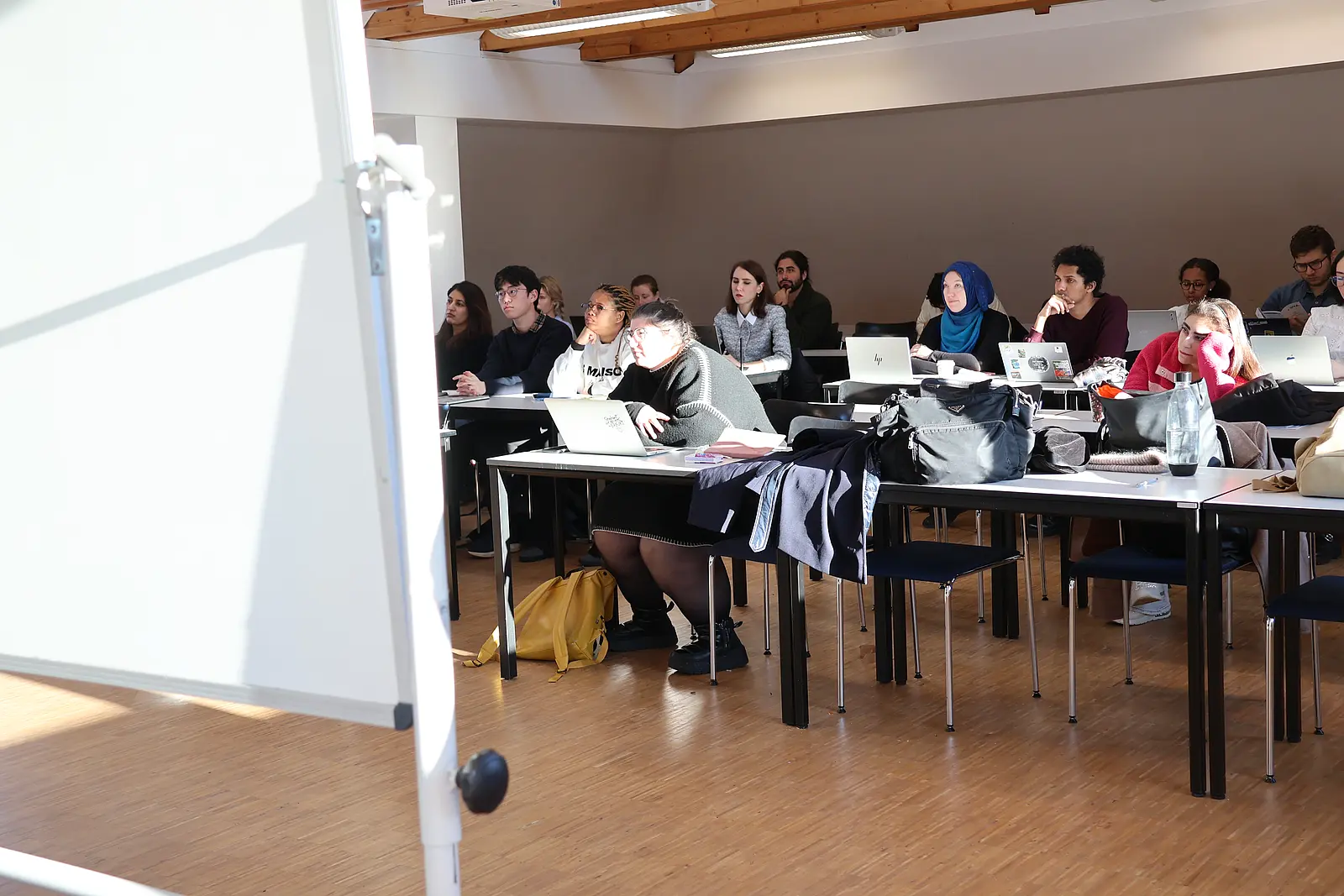
International cooperation is often framed in terms of long-term goals, partnerships, and shared values. Yet on 17 December 2025, at the Willy Brandt School of Public Policy, those familiar narratives were deliberately unsettled. During the Inside International Cooperation: Critical Perspectives and Career Pathways event, organized in collaboration with GFA Consulting Group and held as part of the course Postcolonial Perspectives on Development, Peace, and Conflict: Democracy and Civil Society in Action, the discussion focused not on ideals alone, but on how geopolitics, donor politics, and uncertainty are reshaping the field in very concrete ways.
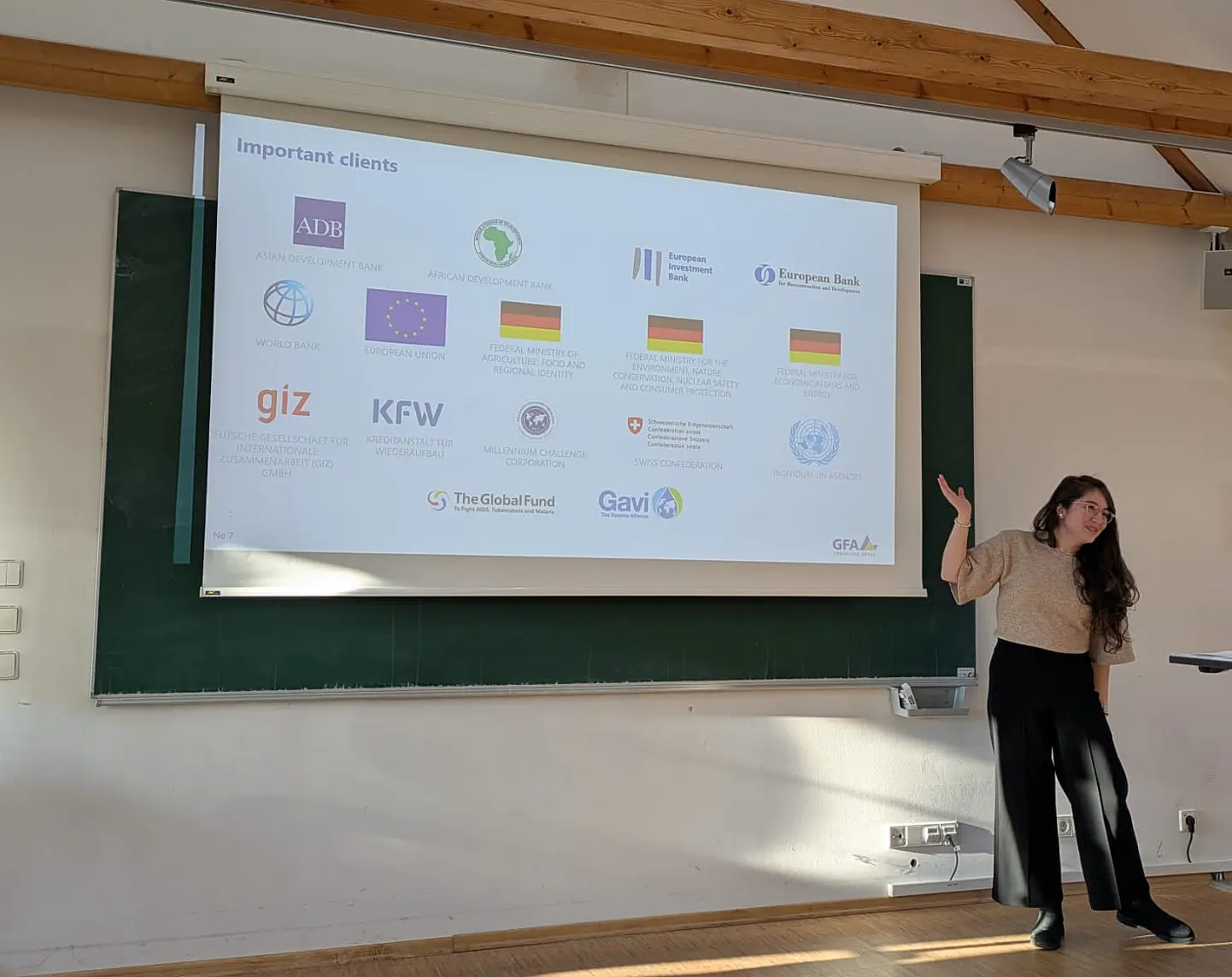
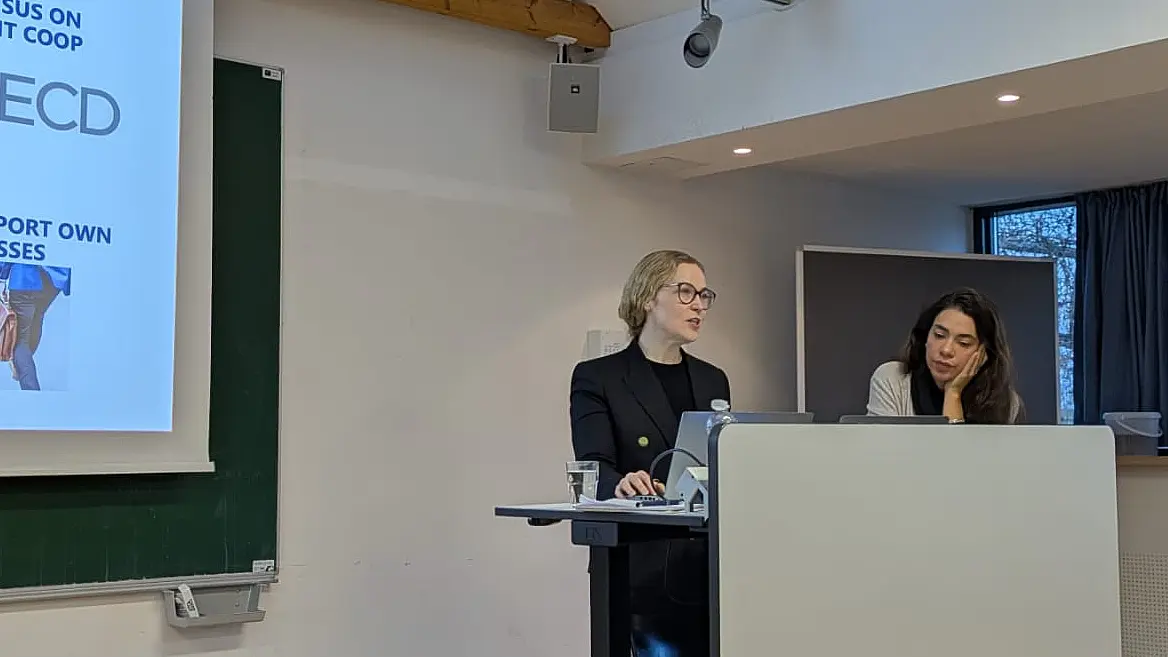
Hosted by Dr. Alejandra Ortiz-Ayala and Florian Heintze, and featuring Dr. Victoria Jennett, Ms. Halima Abdi (joining remotely), and María José Quirola (an MPP alumna), the event created space for an honest conversation about where international cooperation stands today, and what it increasingly demands from those working within it.
Development Cooperation Under the Microscope
One moment that stayed with me was the clear articulation that international development cooperation, particularly that funded by donors from the Global North, is no longer constrained only by limited resources. It is also profoundly affected by shifting voter moods in donor countries, economic uncertainty, and the rise of conservative and populist movements. The message was direct: development cooperation today must continually justify its relevance, costs, and priorities. It is no longer shielded by consensus. It is under scrutiny.
This became even more tangible when geopolitics was explicitly discussed. The war in Ukraine was not described as a background context, but as a force actively reshaping projects. Speakers explained how many initiatives had to pivot, whether in the health sector by focusing more on mental health, or in reconstruction efforts framed through the EU narrative of “they destroy, we rebuild.” In these examples, geopolitics was not abstract. It was shaping language, funding, and implementation choices in real time.
When Practice Meets Experience
The discussion resonated strongly with my own professional experience. Having previously worked with both the Konrad-Adenauer-Stiftung (KAS) and the Friedrich-Naumann-Stiftung, I am familiar with the challenges of navigating donor requirements while implementing projects on the ground, even at a smaller scale. What this event added was a sharper understanding of how these challenges multiply in large, complex, multi-donor environments.
Ms. Halima Abdi’s reflection on a GIZ-supported project in Nigeria, particularly the graduation approach, captured this complexity vividly. Beyond technical design, the project had to operate within an unstable financial system, navigating exchange and exchange-rate difficulties. This immediately reminded me of the 2019 financial crisis in Lebanon, where, as a project manager at KAS, I had to balance on-the-ground realities with strict compliance requirements from headquarters in Germany. In both contexts, financial instability was not a side issue. It shaped every operational decision.
The question of sustainability emerged just as clearly. One example that stood out was the withdrawal of a project partner following the USAID pullout under the new Trump administration. The consequences were immediate and severe: reduced operations, office closures, and ultimately, GFA continuing implementation alone in Nigeria. This illustrates that project stability does not rest on funding alone, but equally on partner commitment and geopolitical continuity.
Skills, Adaptation, and Professional Reality
The second session shifted the focus toward careers, but maintained the same level of realism. What became clear is that working in international development cooperation today requires far more than motivation or normative commitment. Transferable skills and solid hard skills are no longer optional. For me, this translated into a clearer sense of direction. It reinforced the importance of highlighting project management experience, while also investing more seriously in quantitative research and data analysis skills, particularly through tools such as R and Python, which are provided by the Brandt School and are increasingly relevant for policy analysis, monitoring, and evaluation. Language skills, mainly German, also emerged as critical, not only for employability, but for navigating institutional and professional spaces effectively.
What Stayed With Me
If there is one idea I carried away from the event, it is this: international development cooperation today is defined by uncertainty. Geopolitical shifts, donor politics, and fragile partnerships are not exceptions; they are structural conditions. Adapting to change is therefore not optional. In uncertain environments, the ability to pivot, reassess, and remain open to change is essential. Engaging critically with international cooperation does not mean disengaging from it. It means entering the field with open eyes, practical skills, and a readiness to navigate contradictions rather than ignore them.
The event was a reminder that learning in international cooperation happens most meaningfully when critical reflection meets lived practice, and when brutal realities are discussed openly rather than softened for comfort.
Disclaimer
This blog post reflects my personal reflections and interpretations as a participant in the event. The views expressed here do not necessarily represent those of GFA Consulting Group, the Willy Brandt School of Public Policy, or the event speakers.
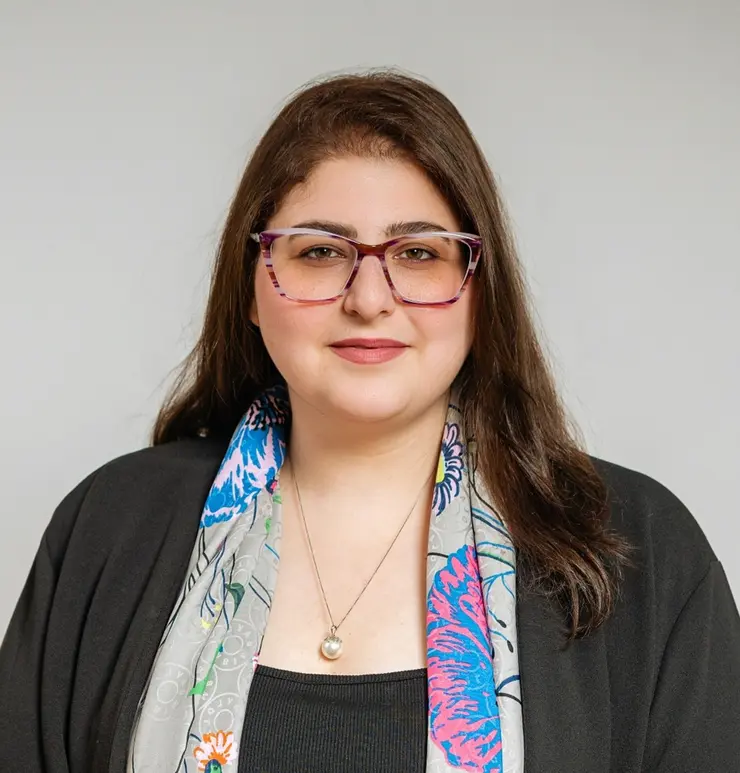
Nour Alwan is an MPP student focusing on peace, conflict and transformative justice.
![[Translate to English:] Facebook Icon](/fileadmin/SocialMediaIcons/iconfinder_06-facebook_104498.svg "Fakebookseite der Staatswissenschaftlichen Fakultät")
![[Translate to English:] Youtube Icon](/fileadmin/SocialMediaIcons/iconfinder_18-youtube_104482.svg)


![[Translate to English:] facebook icon](/fileadmin/SocialMediaIcons/iconfinder_06-facebook_white.svg)
![[Translate to English:] twitter icon](/fileadmin/SocialMediaIcons/iconfinder_03-twitter_white.svg)
![[Translate to English:] instagram icon](/fileadmin/SocialMediaIcons/iconfinder_38-instagram_white.svg)
![[Translate to English:] YouTube icon](/fileadmin/SocialMediaIcons/iconfinder_18-youtube_white.svg)
![[Translate to English:] xing icon](/fileadmin/SocialMediaIcons/iconfinder_xing_white.svg)