Reimagining transport infrastructure: How to make choice, safety and inclusivity part of Berlin's Mobility Future
Policy Analysis
“…Things are going to slide, slide in all directions
Won't be nothing (won't be nothing)
Nothing you can measure anymore
The blizzard, the blizzard of the world
Has crossed the threshold
And it's overturned
The order of the soul…”
The time is 7:15 AM. Jonas wakes up to the chorus of the 43-year old song “The Future” by Leonard Cohen. He waits until the end of the song, and then stretches himself over to the Google Home smart voice controller 10s on the table beside the bed, clicks a button, the curtains open. After a few typical morning to-dos, he takes the coffee readily prepared by the smart coffeemaker, puts cereal in a bowl, followed by almond milk. He then remembers to water his vertical garden. Without a hassle, he clicks a button and the watering is done. The name of almost every device and home appliance in Jonas’ apartment starts with the word “smart”, but being reliant on everything fully automated makes him feel unsmart. At 8:30 AM sharp, Jonas leaves for work. Like his colleagues and friends, he has an e-scooter and an e-bike fully controllable by his smartwatch. He checks his smartwatch and sees two new messages from his girlfriend X Æ A-22. Jonas decides to ride the bike today, before taking the U-Bahn as the last leg of his trip to the office.
In 2035 Berlin, almost everything seems automated except the humanistically improved intermodality which is choice-based, safe and inclusive. The integration of future-oriented technologies in our daily lives always need to be accompanied by human-centered design. “Smart” technological advancement does not make things necessarily smart; taking account of human perspectives does. How can we achieve this scenario in mobility? Here are the three key strategies to make Berlin’s mobility future-proof and smart.
Stick to the basics in planning and designing – the Choice Theory
According to the Choice Theory, by William Glasser, all choices are made to satisfy five basic needs: survival, love and belonging, power, freedom, and fun. The futuristic scenario mentioned at the beginning, apart from Jonas’ commute, fails to consider the aspects of power, freedom and fun. Berlin needs to promote intermodality by linking the mobility options closely. For instance, bike renting at the stations, aligning bus and rail schedules. It gives citizens more freedom to choose. The city needs to develop innovative reservation and payment systems to give commuters easier access to different mobility options. Access is power. Adopting placemaking strategies in the public realm makes it more attractive for commuters. The idea of placemaking has community-based participation at its center. Berlin central station should not only be the place where we wait for and take the train. It could be a place where we let our children enjoy in a playground nearby after picking them up from school. It could be a place where we can have a delicious Asian lunch. It could be a place where we can enjoy public art and graffitis. It gives us a sense of belonging and makes it fun to use.
Make it safe
The charity Humanity & Inclusion defines “safe mobility” as the ability for a person to safely and reliably access a preferred destination by navigating an environment considerate of their needs and preferences. The keyword in this definition is “considerate.” According to a survey by the Local, most of the negative safety experiences of U-Bahn and S-Bahn users took place in Berlin. So, how can Berlin’s mobility system be considerate? It comes back to the topic of human-centered design. Talk to the users, even the non-users. Can people with disabilities safely use the whole mobility system? Take note of their commuting patterns. Think about the whole chain. Just one unsafe link in the chain will make the whole experience unsafe. Also, consider how we can make use of new technologies to ensure safety. We need to strike a balance between human-centred design and the use of technology. For example, the safety management systems adopted by the American Public Transport Association (APTA) not only include the four comprehensive components of policy, risk management, assurance and promotion, but also use new technologies such as collision avoidance systems in buses.
Inclusivity enables people
Making Berlin’s public transit inclusive starts with a simple checklist: are all U-Bahn, S-Bahn and bus stations in Berlin accessible for children, older people and people with disabilities? Do they comply with the General Equal Treatment Act (Allgemeines Gleichbehandlungsgesetz) and the German Social Code (Sozialgesetzbuch IX)? When we take into account one of the most vulnerable groups in our society, we are making the infrastrcture inclusiver for everyone. A society which leaves no one behind is the one that is future-proof. But the goal does not stop at public transit which is just a part of the mobility. Los Angeles’ First Last Mile Strategic Plan advocates the reconfiguration of seats and the addition of storage spaces on public transit. It also proposes safety improvements of sidewalks and routes to transit nodes such as accessible curb ramps and safe street crossings. Transformative Mobility regards the starting points for personal mobility – from home to barrier-free and safe streets and sidewalks – as the first priority before improvements to public transit are made.
According to the UNDP’s Foresight Manual, foresight premises the “in-progress” nature of the future and the way it can be actively influenced or even created. The future-proof and smart Berlin mobility can be achieved by making sure that it is safe, inclusive, and choice-based. Human-centered design acts as a central theme.
About the author
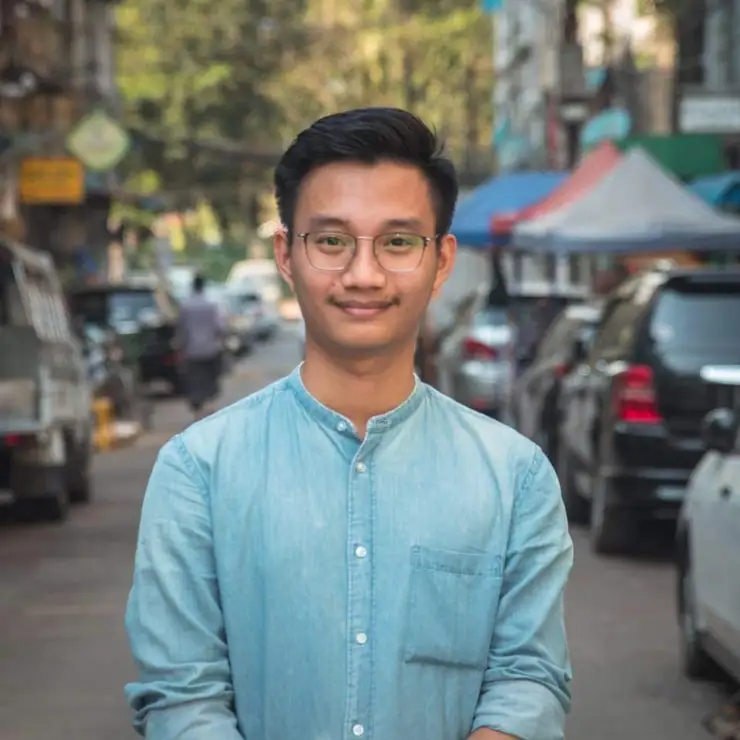
Kyaw Si Thu is a second-year MPP candidate at the Willy Brandt School of Public Policy, specializing in International Affairs & Development, and Non-profit Management. He holds Postgraduate Diplomas in International Affairs and International Relations. Before coming to Germany to study at the Brandt School, he worked for three years in industrial policy research, heritage restoration and Placemaking.
Kyaw's academic and research interests lie in urban issues, citizen participation, Placemaking, international aid and social media. He is also currently working as a consultant at Protection Group International.
~ The views represented in this blog post do not necessarily represent those of the Brandt School. ~
![[Translate to English:] Facebook Icon](/fileadmin/SocialMediaIcons/iconfinder_06-facebook_104498.svg "Fakebookseite der Staatswissenschaftlichen Fakultät")
![[Translate to English:] Youtube Icon](/fileadmin/SocialMediaIcons/iconfinder_18-youtube_104482.svg)


![[Translate to English:] facebook icon](/fileadmin/SocialMediaIcons/iconfinder_06-facebook_white.svg)
![[Translate to English:] twitter icon](/fileadmin/SocialMediaIcons/iconfinder_03-twitter_white.svg)
![[Translate to English:] instagram icon](/fileadmin/SocialMediaIcons/iconfinder_38-instagram_white.svg)
![[Translate to English:] YouTube icon](/fileadmin/SocialMediaIcons/iconfinder_18-youtube_white.svg)
![[Translate to English:] xing icon](/fileadmin/SocialMediaIcons/iconfinder_xing_white.svg)