Security or Violent Democracy? Colombia’s Runoff and the Future of State Violence
Global Updates by Brandtians
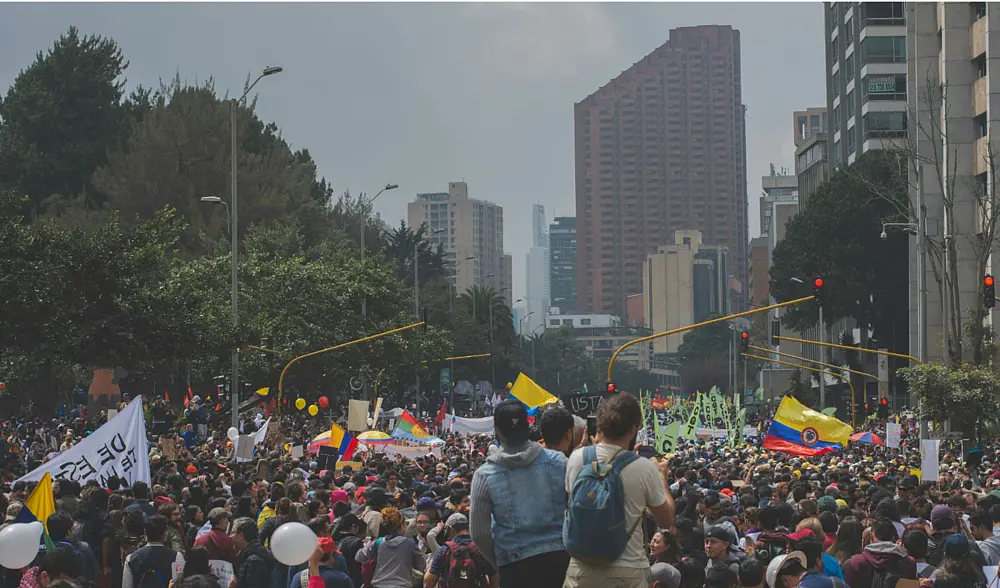
Nearly ten years after the peace agreement with the Revolutionary Armed Forces of Colombia (FARC), Colombians are once again voting in the shadow of violence. Armed groups still dispute control of rural territories, police violence in 2020-2021 left lasting scars, and the state’s presence remains uneven and often coercive. Against this backdrop, the presidential runoff between left-wing senator Iván Cepeda and far-right lawyer Abelardo de la Espriella is being sold as a simple referendum on who can be tougher on crime.
But reducing the election to a competition over “law and order” hides a more unsettling question: What kind of state—and what kind of democracy—do Colombians want after decades of conflict and unfinished reforms? At stake are two fundamentally different projects of the social contract. One that seeks to restrain state violence through transitional justice and human security. Another that promises iron-fisted order, mega-prisons, and a smaller state, even if that means loosening the safeguards that protect citizens from the very institutions meant to keep them safe.
The democratic cost of security
Colombia's security challenges are not only the result of armed groups or criminal economies. They are also linked to institutions that were never fully transformed after the peace agreement. While the conflict changed, many of the doctrines, structures, and practices that guided the security forces remained in place. The police response to the 2020–2021 protests exposed the consequences of this continuity, revealing how quickly demands for public order can override protections for democratic participation. Underneath these episodes lies a deeper problem: the persistence of an internal enemy mentality that continues to shape how some sectors of the state perceive protesters, rural communities, and other marginalized groups. As long as security institutions approach certain citizens primarily as potential threats rather than rights-bearing individuals, the line between protection and repression will remain fragile.
In this context, calls for a “firm hand” resonate with sectors exhausted by extortion, kidnapping, and armed control of territories. Yet scholars and activists point to the False Positives scandal—a campaign of extrajudicial killings in which civilians were falsely presented as enemy combatants—as a warning about the dangers of unchecked coercive power. A state that responds to insecurity by expanding its coercive capacity while leaving oversight and accountability weak risks becoming a “violent democracy.”
In this case, elections persist, but entire groups experience the state primarily through checkpoints, raids, and the ever-present threat of being treated as enemies. The runoff forces Colombians to decide whether security will continue to be pursued through this kind of militarized democracy or whether it can be reimagined around human security, institutional reform, and a different relationship between the state and its citizens.
Two competing visions of security and State power
The election is often framed as a clash between “left” and "right." Underneath the labels lie two different answers to a deeper question: What should the Colombian state be, and for whom?
Iván Cepeda’s project builds on Total Peace and the 2016 peace agreement. It sees the state as a guarantor of rights that must negotiate with armed actors, expand public services, and reform its own security institutions to earn legitimacy. In this view, democracy means more than periodic elections. It requires institutions capable of investigating abuses and holding state actors accountable.
The Special Jurisdiction for Peace (JEP) sits at the center of this vision. More than a court for judging crimes such as the False Positives, it represents an effort to confront past abuses, acknowledge responsibility, and rebuild trust with victims through truth and accountability. Supporters argue that transitional justice is not only about the past. By increasing the costs of abuse and challenging the incentives that enabled them, institutions like the JEP seek to make future state violence less likely (Trejo et al., 2025).
Yet this project faces a fundamental challenge: it must convince Colombians that institutions can deliver security. Negotiation, transitional justice, and territorial reform are long-term processes, while insecurity is experienced in the present. If negotiations fail to produce visible improvements in everyday security, public frustration may further strengthen demands for more punitive responses
Abelardo de la Espriella emerged as one of the most visible representatives of Colombia’s hard-right political camp. His discourse centers on restoring order, strengthening state authority and expanding the role of the security forces, while rejecting what he considers the failures of negotiation-based approaches toward armed groups. He argues that insecurity is Colombia's most pressing challenge and that the state must regain control through a tougher security strategy. His proposals include expanding military and police operations, building mega-prisons, dismantling the JEP, and reducing the size of the state. Together, these measures prioritize coercion and territorial control while weakening institutions designed to investigate state abuses. In doing so, they risk treating cases such as the False Positives as isolated acts rather than symptoms of deeper institutional problems.
If this vision prevailed in the 2026 elections, Colombia could move away from the principles that have shaped recent peacebuilding efforts. Rather than addressing the political, social, and institutional roots of violence, an enemy centered approach would place military victories, territorial control, and punishment at the center of security policy. Yet more coercion does not automatically produce more security (Gillooly & Shenk, 2026). Without stronger accountability and institutional reform, violence would not disappear but become harder to scrutinize in a country where the law-and-order narrative presents rights and democratic safeguards as obstacles.
The global politics of fear and order
The appeal of these messages is understandable. Organized crime, armed conflict, and drug trafficking continue to shape the daily lives of millions across the region. In Colombia, these challenges are further embedded in transnational drug markets and illicit economies that generate incentives far beyond the country’s borders, making purely military solutions unlikely to succeed on their own.
Yet Colombia represents a particularly important case. For decades, it has lived through the paradox of democracy coexisting with high levels of political violence and civil war. Elections, parties, and formal democratic institutions have persisted alongside armed conflict, selective violence, and the recurrent acceptance of force as a means of resolving political disputes. Hence, this election is a test of whether Colombia can leave behind the idea that violence is the ultimate answer to political conflict. In many ways, Colombia is confronting a question that resonates across the region. While elections continue to take place and democratic institutions remain formally intact, democracy extends far beyond the ballot box. It also requires citizens to be able to participate, organize, protest, dissent, and hold authorities accountable without fear.
When police abuse, militarized security policies, and selective forms of violence become normalized, democratic citizenship becomes increasingly constrained, even as democratic procedures continue to function. The question facing Colombians, therefore, is not only how to reduce violence but also how much power they are willing to place in the hands of the state in exchange for “greater security.”
Security for whom?
Colombians are not simply choosing between two security strategies. They are deciding what lessons to draw from decades of conflict. Whether the state should be constrained by institutions built to prevent past abuses, or whether order should take priority over those safeguards. The answer will shape not only how Colombia confronts violence, but also what kind of democracy emerges from it.
~ The views represented in this blog post do not necessarily represent those of the Brandt School. ~
Sources
Acemoglu, D., Fergusson, L., Robinson, J. A., Romero, D., & Vargas, J. F. (2016). The perils of high-powered incentives: Evidence from Colombia’s false positives (Working Paper No. 22617). National Bureau of Economic Research. https://doi.org/10.3386/w22617
France 24. (2022, December 9). Who gave the order? Investigating Colombia’s “false positives” scandal. YouTube. www.youtube.com/watch;
Gillooly, S. N., & Shenk, J. L. (2026). Formalizing Corporate Counterinsurgency: State-Company Security Contracts in Colombia’s Extractive Industries. Latin American Research Review, 1-21.
Iturralde, M. (2025). Killing in the name of democracy. Transnational security circuits and the false positives case in Colombia. Critical Studies on Security, 13(2), 152–171. doi.org/10.1080/21624887.2025.2463729
Trejo, G., Albarracín, J., & Tiscornia, L. (2025). A theory of transitional justice and criminal wars in new democracies: Breaking state impunity to craft peaceful democracies. Cambridge University Press.
Uprimny, R. (2026). Mi opción frente a una elección divisiva y decisiva. El Espectador.
Zulver, J., & Anctil Avoine, P. (2026). Why a far-right president won't solve all Colombia's problems. The Loop (ECPR).
Authors

Taylor Major-Dame is an American Master of Public Policy candidate at the Willy Brandt School of Public Policy. She specializes in anti-corruption and integrity systems, drawing on experience managing food and workforce programs in underserved U.S. communities. She brings a grounded understanding of how institutions shape everyday governance and equity.
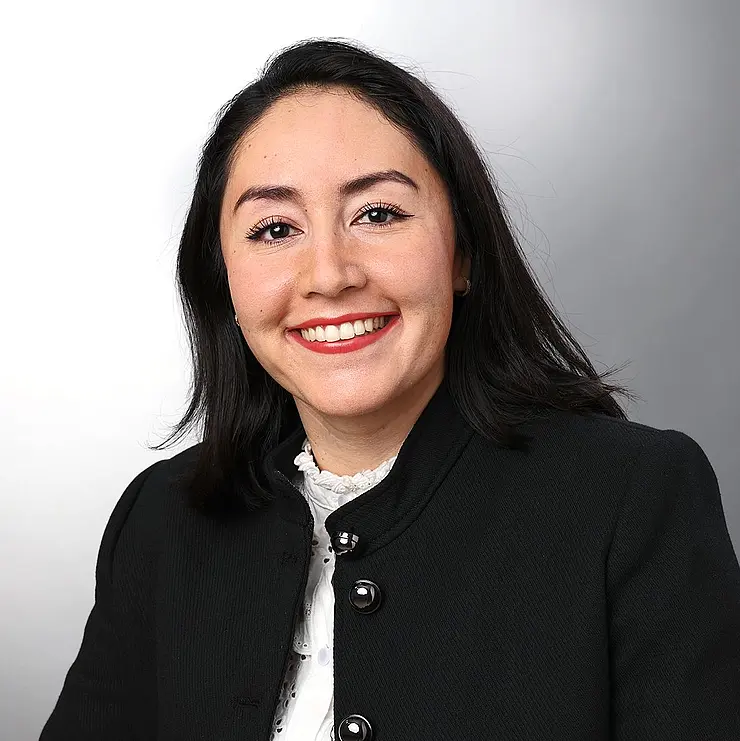
Rebeca Olascoaga Carbajal García is a Mexican Master of Public Policy candidate at the Willy Brandt School of Public Policy and a DAAD Helmut-Schmidt Program scholar. She brings experience in governance, gender equality, security sector reform, and democratic accountability, with a particular interest in how institutions respond to complex social and political challenges in Latin America and beyond.
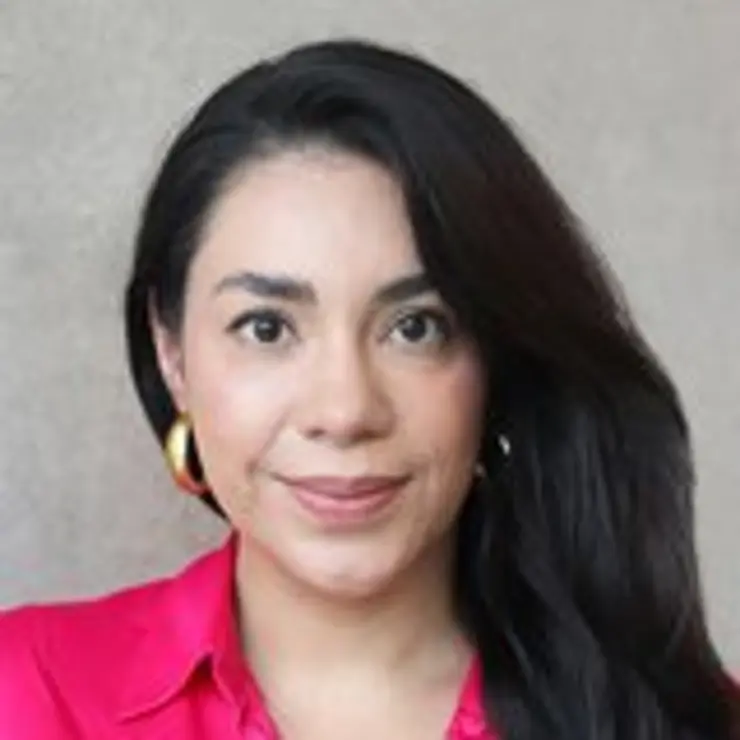
Alejandra del Pilar Ortiz-Ayala PhD, Research Associate and Head of Conflict and Conflict Management Specialization at the Willy Brandt School of Public Policy, University of Erfurt. Before coming to the Willy Brandt School, she was a research assistant fellow on a participatory action research project with young people with refugee backgrounds in southern New Zealand at the School of Education of the University of Otago. Methodologically, she is a mixed-methods researcher; she has experience designing and analyzing public opinion surveys, including lab-in-the-field experiments, survey experiments, and semi-structured and in-depth interviews.
![[Translate to English:] Facebook Icon](/fileadmin/SocialMediaIcons/iconfinder_06-facebook_104498.svg "Fakebookseite der Staatswissenschaftlichen Fakultät")
![[Translate to English:] Youtube Icon](/fileadmin/SocialMediaIcons/iconfinder_18-youtube_104482.svg)


![[Translate to English:] facebook icon](/fileadmin/SocialMediaIcons/iconfinder_06-facebook_white.svg)
![[Translate to English:] twitter icon](/fileadmin/SocialMediaIcons/iconfinder_03-twitter_white.svg)
![[Translate to English:] instagram icon](/fileadmin/SocialMediaIcons/iconfinder_38-instagram_white.svg)
![[Translate to English:] YouTube icon](/fileadmin/SocialMediaIcons/iconfinder_18-youtube_white.svg)
![[Translate to English:] xing icon](/fileadmin/SocialMediaIcons/iconfinder_xing_white.svg)