The Politics and Policies of Aid: A Joint Institutional Experience in Vienna
Brandt School Life
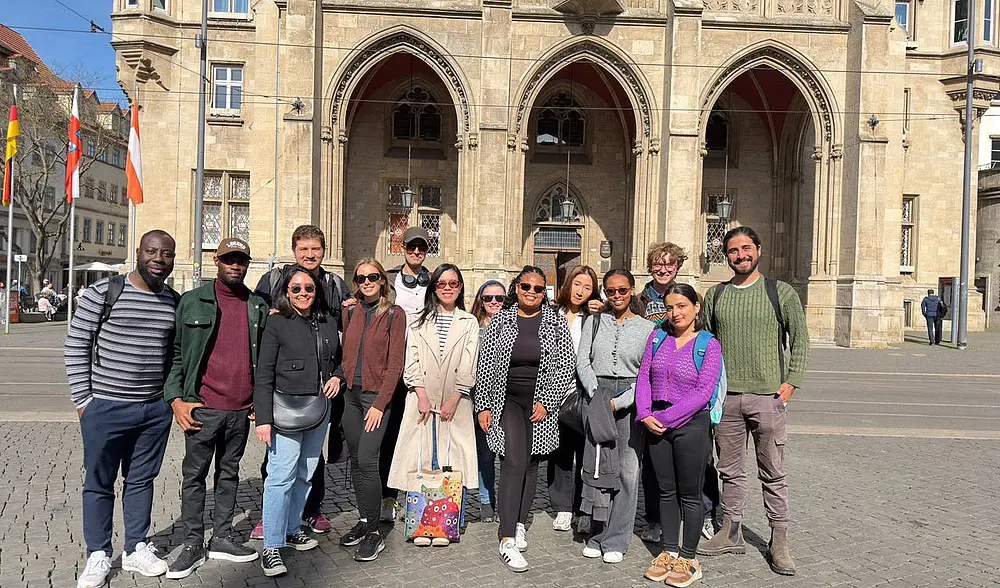
This April, students from the Willy Brandt School of Public Policy (WBS) at the University of Erfurt and the Central European University (CEU) gathered at CEU’s Vienna campus for an intensive seminar within the course “The Politics and Policies of Aid”. The course was co-taught by Dr. Evans Awuni, representing Prof. Dr. Achim Kemmerling (University of Erfurt), and Prof. Dr. Tilo Bodenstein (CEU), with Prof. Stephan Klingebiel (IDOS Bonn) as guest speaker. As a collaborative initiative, the course brought together students from diverse academic, professional, and cultural backgrounds to examine a central question of contemporary global governance: How is international development cooperation changing in an increasingly fragmented and multipolar world?
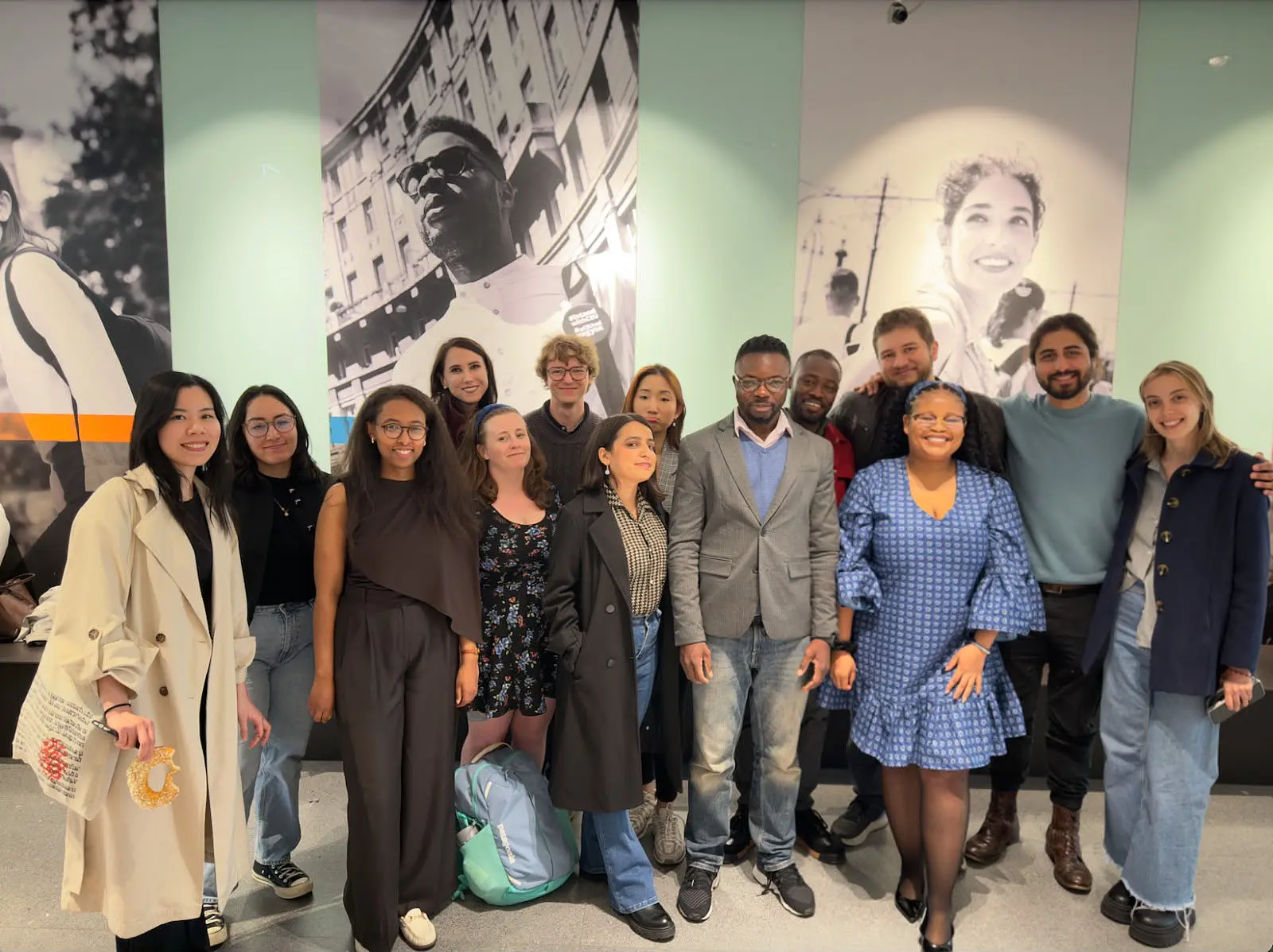
Blending online teaching with an in-person seminar, the course explored the political, economic, and normative foundations of aid. Participants examined bilateral and multilateral cooperation and the roles of governments, international organisations, development agencies, NGOs, philanthropic actors, and the private sector. Particular attention was given to emerging development actors, especially China, and to the implications of a more diversified aid architecture.
Beyond providing an overview of institutional structures, the seminar invited participants to reconsider many of the assumptions that have traditionally underpinned international development cooperation. Discussions addressed topics such as the decolonisation of aid, South–South cooperation, changing donor-recipient relationships, and the increasing tension between normative commitments and geopolitical interests. Rather than treating aid as a purely technical policy instrument, the course approached it as a political institution deeply embedded within the broader dynamics of international relations.
Some of the seminar's most stimulating conversations emerged outside the formal classroom setting, where students and faculty continued debating questions that remain central to the future of international cooperation. To what extent does institutionalised aid genuinely respond to the developmental priorities of recipient societies, and to what extent is it shaped by the strategic interests of the international community? What role will aid play in an international order characterised by shifting centres of power? As emerging actors increasingly reshape development cooperation, is the global aid system undergoing structural transformation or merely adapting to new geopolitical realities?
During the seminar, Prof. Dr. Tilo Bodenstein and Dr. Evans Awuni invited participants to reflect on the importance of adaptability as a defining principle for the future of international development cooperation. They raised the question of whether greater flexibility within multilateral approaches could enable international actors to address emerging challenges more directly and effectively, without requiring lengthy processes of ideological alignment before collective action becomes possible. At the same time, they encouraged students to consider how such flexibility could be reconciled with the continued importance of the normative foundations that have historically shaped development cooperation.
Sustainable development cooperation rarely succeeds in the absence of stable political institutions, functioning governance structures, and a secure environment. Without these enabling conditions, even the most ambitious aid programmes, whether implemented by states, international organisations, or civil society, face significant structural constraints. In this sense, development and security cannot be understood as separate policy domains; rather, they reinforce one another within an increasingly interconnected global landscape.
Participants also explored one of the oldest and most controversial debates surrounding international aid: is aid ultimately a platform for sustainable development, or can it also reproduce relationships of dependency? While development assistance undoubtedly contributes to poverty reduction, institutional strengthening, and humanitarian relief, it simultaneously raises important questions regarding power asymmetries between donors and recipients. Throughout the seminar, these tensions were not presented as contradictions per se but rather as features of a development architecture shaped by competing political interests, historical legacies, and normative aspirations.
Much of today's international development architecture emerged in the aftermath of the Second World War, when the United States assumed a leading role in Europe's reconstruction through the Marshall Plan. Beyond its economic significance, this experience profoundly influenced subsequent models of development cooperation by embedding aid within a broader normative framework centred on liberal democracy, the rule of law, market-oriented economic governance, and international cooperation.
This historical perspective prompted participants to consider a series of challenging contemporary questions. Should adherence to liberal democratic principles continue to serve as an implicit condition for receiving international assistance? Can development cooperation remain politically neutral when the values underpinning the existing international order are themselves increasingly contested? More fundamentally, is the promotion of a liberal international order necessarily the most effective tool to address the diverse development challenges confronting different regions of the world?
Rather than seeking definitive answers, the seminar encouraged students to appreciate and integrate the complexity of these dilemmas into their understanding. Persistent challenges, including poverty, institutional fragility, corruption, limited state capacity, and inadequate infrastructure, cannot be explained solely through domestic shortcomings or historical colonial legacies. They are also shaped by the interaction between domestic political choices, international economic structures, historical trajectories, and the incentives created by the global development system itself. From this perspective, participants reflected on whether an implicit "standardisation" of governance expectations has gradually emerged as a prerequisite for successful participation in international development cooperation.
These discussions also underscored the inseparable relationship between international aid and the study of International Relations. Transformations in the global distribution of power inevitably reshape the objectives, strategies, and behaviour of both donors and recipients. Whether viewed through the lenses of realism, liberal institutionalism, or constructivism, aid reflects far more than humanitarian concern; it also embodies competing visions of international order, political legitimacy, and global governance.
Accordingly, one of the seminar's central questions remained deliberately open: Who defines the global rules governing aid, and who decides which issues deserve international attention? Behind every development priority lies a complex process of agenda-setting involving governments, international organisations, financial institutions, civil society, and increasingly influential emerging powers. Understanding aid therefore requires analysing not only where resources are allocated, but also how ideas, norms, and political interests shape the architecture through which those resources are distributed.
Throughout the seminar, students presented case studies, delivered thematic presentations, and engaged in collaborative discussions examining contemporary policy challenges from multiple regional perspectives. This interactive learning environment encouraged participants to confront competing viewpoints while exploring innovative approaches capable of enriching future debates on international development cooperation.
During the seminar's concluding session, Prof. Stephan Klingebiel invited participants to reflect on whether the current transformation of international development cooperation should primarily be understood as a crisis or as an opportunity. Rather than interpreting the ongoing reconfiguration of the aid landscape solely as a source of uncertainty, discussions suggested that it may also represent a chance to rethink long-established assumptions regarding partnership, ownership, and effectiveness.
One of the most significant conclusions emerging from the seminar was that relationships between donors and recipients are becoming increasingly fluid. Traditional values-based conditionality now coexists, and in some cases competes, with more pragmatic approaches driven by economic cooperation, strategic partnerships, and geopolitical interests. This evolution does not necessarily imply the disappearance of normative principles; instead, it reflects a development landscape in which values, security considerations, and economic interests increasingly interact rather than operate independently.
This experience represented a tangible example of the growing collaboration between the Willy Brandt School of Public Policy and the Central European University. By bringing together students with diverse academic backgrounds, professional experiences, and cultural perspectives, this initiative strengthened institutional ties while creating an environment that encouraged intellectual exchange, critical inquiry, and collaborative learning.
At a time when the future of international development cooperation is being fundamentally reconsidered, initiatives such as this demonstrate the value of universities as spaces where emerging policymakers can engage critically with the ideas, institutions, and power structures that shape global governance. More importantly, they remind us that understanding aid is not simply about analysing financial flows or development projects. It is about examining the evolving political, historical, and normative foundations of international cooperation itself and asking how these foundations must adapt to meet the challenges of an increasingly complex world.
About the Author
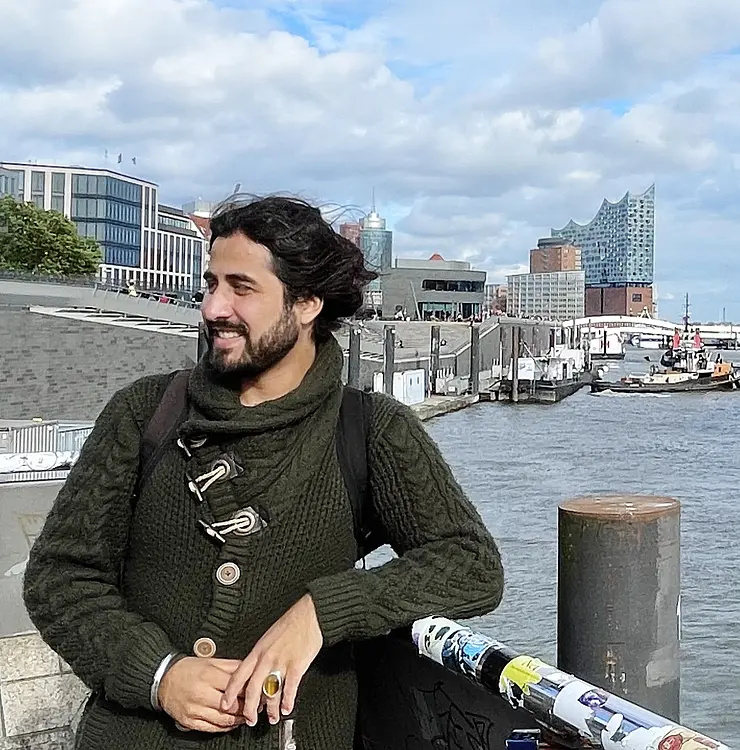
Víctor Aurioles Díaz is a Mexican student in the Master of Public Policy (MPP) programme at the Willy Brandt School of Public Policy at the University of Erfurt. Víctor holds a BA in International Relations and a specialisation in European Studies from the University of Hannover.
His academic and professional interests lie at the intersection of development policy, governance, international cooperation and geopolitics, with a particular focus on how public institutions and international partnerships respond to contemporary global challenges.
Through his work experience in academic cooperation and diplomacy, as well as his research in Geopolitics, he has explored the evolving dynamics of international development, public governance, and policymaking, contributing perspectives on issues shaping regional and global policy agendas. Beyond his academic and professional life, he is a fond lover of nature in an increasingly digitalised world.
![[Translate to English:] Facebook Icon](/fileadmin/SocialMediaIcons/iconfinder_06-facebook_104498.svg "Fakebookseite der Staatswissenschaftlichen Fakultät")
![[Translate to English:] Youtube Icon](/fileadmin/SocialMediaIcons/iconfinder_18-youtube_104482.svg)


![[Translate to English:] facebook icon](/fileadmin/SocialMediaIcons/iconfinder_06-facebook_white.svg)
![[Translate to English:] twitter icon](/fileadmin/SocialMediaIcons/iconfinder_03-twitter_white.svg)
![[Translate to English:] instagram icon](/fileadmin/SocialMediaIcons/iconfinder_38-instagram_white.svg)
![[Translate to English:] YouTube icon](/fileadmin/SocialMediaIcons/iconfinder_18-youtube_white.svg)
![[Translate to English:] xing icon](/fileadmin/SocialMediaIcons/iconfinder_xing_white.svg)